

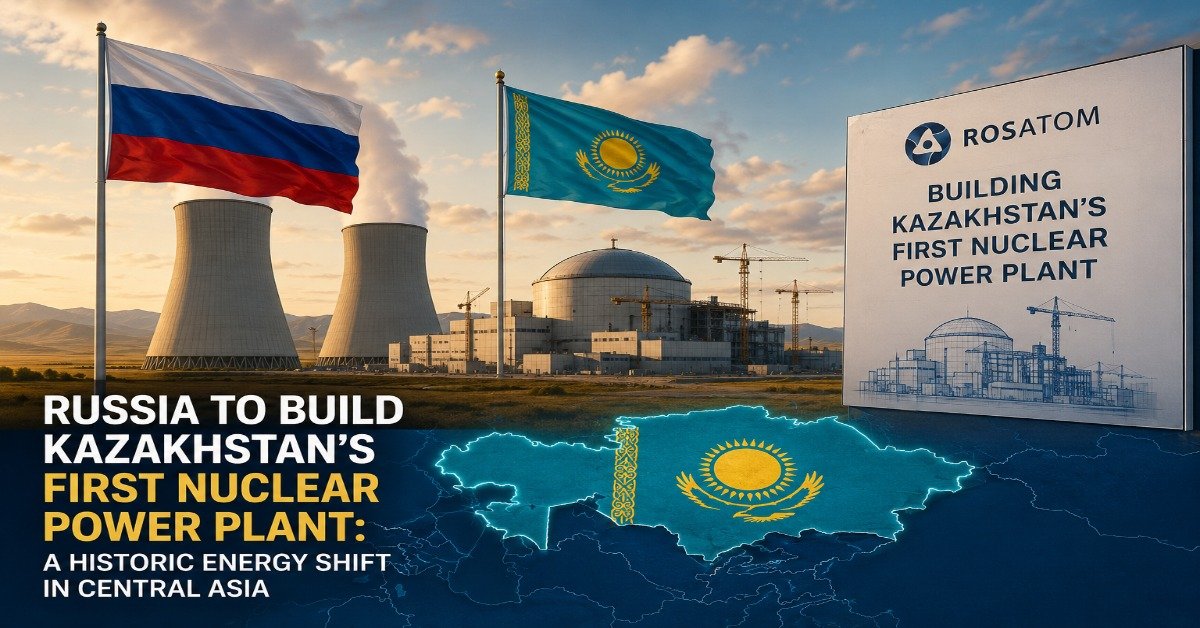
In a landmark move that could reshape Central Asia’s energy landscape, Russia has officially signed an agreement to build Kazakhstan’s first nuclear power plant. The project marks one of the most significant energy developments in the region since the collapse of the Soviet Union and reflects Kazakhstan’s long-term strategy to strengthen energy security, reduce dependence on coal, and modernize its power infrastructure.
The nuclear power plant will be developed by Russia’s state-owned nuclear energy corporation Rosatom and is expected to become a cornerstone of Kazakhstan’s future electricity generation system. The deal has also attracted global attention due to its geopolitical importance, economic scale, and implications for regional energy cooperation.
Kazakhstan’s Return to Nuclear Energy
Kazakhstan is not new to nuclear technology. During the Soviet era, the country played a major role in uranium production and nuclear research. However, after gaining independence in 1991, Kazakhstan gradually moved away from nuclear power generation.
For decades, the country relied heavily on coal-fired thermal power plants and natural gas to meet its electricity needs. While these sources helped power industrial growth, they also contributed to environmental pollution and rising carbon emissions.
Now, with increasing electricity demand, aging infrastructure, and global pressure to adopt cleaner energy systems, Kazakhstan is making a strategic return to nuclear energy.
The newly approved nuclear project represents the country’s first operational nuclear power initiative in modern history.
Details of the Nuclear Power Plant Project
According to official reports, the nuclear power plant will be constructed near the village of Ulken, located close to Lake Balkhash in southeastern Kazakhstan.
Key Project Highlights
- Project Developer: Rosatom (Russia)
- Location: Ulken, Kazakhstan
- Estimated Cost: Around $16.5 billion
- Reactor Type: VVER-1200 Generation III+ reactors
- Number of Reactors: Two
- Expected Construction Start: 2027
- Estimated Launch Timeline: 2034–2036
The VVER-1200 reactors are considered among the most advanced nuclear technologies currently in operation. These reactors include modern safety systems, automated shutdown mechanisms, and improved fuel efficiency compared to older nuclear designs.
Why Kazakhstan Needs Nuclear Power
Kazakhstan possesses enormous natural resources and is the world’s largest producer of uranium. Ironically, despite supplying uranium globally, the country currently lacks domestic nuclear electricity generation.
Several factors are driving Kazakhstan toward nuclear energy:
1. Rising Electricity Demand
Kazakhstan’s industrial sector continues to grow, increasing pressure on the national power grid. Electricity shortages have become more frequent in some regions, especially during peak demand periods.
2. Dependence on Coal
A large portion of Kazakhstan’s electricity still comes from coal-fired power plants. While coal remains affordable, it contributes significantly to air pollution and greenhouse gas emissions.
3. Energy Security
The government wants to reduce dependence on imported electricity and diversify its energy sources. Nuclear energy provides stable, long-term electricity generation without the fluctuations associated with renewable sources like wind and solar.
4. Climate Goals
Kazakhstan has committed to reducing carbon emissions and transitioning toward cleaner energy solutions. Nuclear power is viewed as a low-carbon alternative capable of supporting economic growth while meeting environmental targets.
Rosatom’s Growing Influence
Russia’s Rosatom has become one of the world’s most influential nuclear energy companies. The company is involved in dozens of nuclear projects across Asia, Africa, Europe, and the Middle East.
For Russia, securing the Kazakhstan project is strategically important because:
- Kazakhstan is a neighboring ally and major uranium producer.
- The project strengthens Russia’s technological and economic influence in Central Asia.
- It reinforces long-term energy cooperation between the two countries.
Rosatom’s involvement also ensures access to Russian expertise in reactor construction, fuel supply, and nuclear infrastructure management.
Global Competition Behind the Deal
Before selecting Rosatom, Kazakhstan reportedly considered proposals from several international nuclear companies, including:
- China National Nuclear Corporation (CNNC)
- EDF (France)
- Korea Hydro & Nuclear Power (South Korea)
The competition highlighted Kazakhstan’s growing importance in the global energy sector.
Interestingly, reports suggest Kazakhstan may approve a second nuclear power plant involving China’s CNNC in the future. This indicates the country is attempting to balance relations between Russia and China while expanding its energy capabilities.
Public Debate and National Referendum
Nuclear power remains a sensitive issue in Kazakhstan due to the country’s historical connection with Soviet nuclear testing at the Semipalatinsk Test Site.
Many citizens initially expressed concerns regarding:
- Radiation risks
- Environmental safety
- Waste management
- Long-term health effects
To address public concerns, Kazakhstan held a national referendum in 2024 regarding the future of nuclear energy. The proposal reportedly received majority support, paving the way for the government to move forward with the project.
The referendum represented a major political milestone, showing increasing public acceptance of nuclear energy as part of the country’s future.
Economic Impact of the Project
The construction of Kazakhstan’s first nuclear power plant is expected to generate major economic benefits.
Job Creation
Thousands of jobs could be created during:
- Construction
- Engineering
- Transportation
- Infrastructure development
- Plant operations
Technology Transfer
The project may help Kazakhstan develop domestic expertise in nuclear science and engineering, opening opportunities for future energy projects.
Industrial Development
Large-scale infrastructure projects often stimulate local industries including:
- Steel production
- Cement manufacturing
- Logistics
- Electrical equipment supply
Environmental Considerations
Supporters argue that nuclear power offers significant environmental advantages compared to fossil fuels.
Potential Benefits
- Lower greenhouse gas emissions
- Reduced air pollution
- Stable large-scale electricity generation
- Less dependence on coal
However, environmental groups continue to raise concerns about:
- Nuclear waste disposal
- Water usage near Lake Balkhash
- Accident risks
- Long-term ecological impact
Kazakhstan’s government has promised strict international safety standards and environmental monitoring throughout the project lifecycle.
Strategic Importance for Central Asia
The nuclear plant is not just an energy project — it is a geopolitical and strategic development with regional implications.
Central Asia is becoming increasingly important in global energy politics due to:
- Uranium reserves
- Oil and gas resources
- Trade routes
- Growing electricity demand
Kazakhstan’s decision to develop nuclear power could influence neighboring countries and reshape the region’s future energy policies.
If successful, the project may encourage further nuclear investments across Central Asia.
Challenges Ahead
Despite the ambitious plans, the project still faces several major challenges:
Financing Risks
Large nuclear projects often exceed initial budgets and timelines.
Public Trust
The government must maintain transparency and public confidence throughout construction.
Safety and Regulation
Kazakhstan will need strong regulatory systems and highly trained personnel to safely operate nuclear facilities.
Geopolitical Pressure
The project could become entangled in broader geopolitical tensions involving Russia, China, and Western countries.
Closing Notes
Russia’s agreement to build Kazakhstan’s first nuclear power plant marks a historic turning point for the country’s energy future. The project symbolizes Kazakhstan’s transition toward modern energy infrastructure while strengthening strategic ties with Russia.
Although the development promises energy security, economic growth, and lower carbon emissions, it also brings complex challenges related to safety, financing, environmental protection, and geopolitics.
As construction moves forward over the coming years, the project will likely become one of the most closely watched energy developments in Central Asia. Its success or failure could influence the future direction of nuclear energy adoption across the entire region.
With rising global energy demand and increasing pressure for cleaner power sources, Kazakhstan’s nuclear journey may ultimately become a defining chapter in the evolving global energy landscape.




)
