
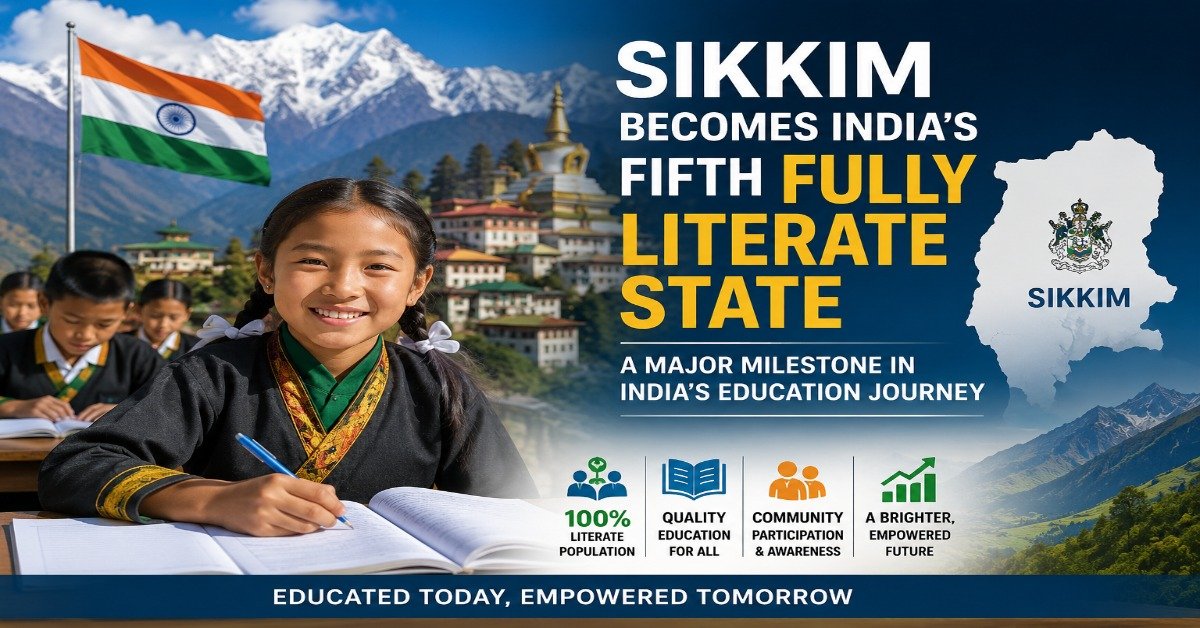
In a historic achievement for India’s education sector, Sikkim has officially become the country’s fifth fully literate state. The northeastern Himalayan state reached this remarkable milestone after successfully improving literacy levels among adults and ensuring broader access to education across urban and rural regions.
The announcement marks a major victory for educational development, social inclusion, and government-led literacy campaigns. Sikkim’s achievement is being celebrated nationwide as an example of how focused policies, community participation, and consistent educational reforms can transform society.
The state’s success also strengthens India’s broader mission of improving literacy rates and promoting lifelong learning opportunities for all citizens.
What Does “Fully Literate State” Mean?
A state is considered “fully literate” when it achieves a literacy rate above the benchmark set by the government under national literacy programs. In India, full literacy generally means that nearly all individuals above a certain age possess basic reading, writing, and comprehension skills.
The recognition is linked with the goals of the ULLAS – Understanding Lifelong Learning for All in Society initiative launched by the Government of India. The program focuses on:
- Adult education
- Foundational literacy
- Life skills
- Vocational education
- Digital and financial literacy
Sikkim successfully fulfilled these literacy standards through extensive educational outreach and community-level participation.
Sikkim’s Educational Transformation
Sikkim, despite being one of India’s smallest states by population, has consistently performed well in social development indicators including education, healthcare, and environmental sustainability.
Over the years, the state government has invested heavily in:
- School infrastructure
- Teacher training
- Rural education programs
- Adult literacy drives
- Digital learning initiatives
The government also focused on ensuring that remote mountainous areas had equal access to educational opportunities.
This long-term commitment gradually improved literacy rates and reduced educational inequality across districts.
The Journey Towards Full Literacy
Achieving full literacy is not a short-term accomplishment. It requires years of planning, monitoring, and community engagement.
Sikkim’s literacy mission included several important strategies:
1. Adult Education Campaigns
Special literacy centers were established for adults who had missed formal schooling during childhood. Volunteers, teachers, and local organizations played a crucial role in teaching basic reading and writing skills.
2. Community Participation
Village communities actively supported literacy drives. Local administrations worked closely with residents to identify non-literate individuals and encourage participation in educational programs.
3. Focus on Women’s Education
Women’s literacy received special attention under state-level awareness programs. Increasing female literacy significantly contributed to the overall literacy rate improvement.
4. Technology and Digital Learning
Digital education tools and online learning resources helped improve accessibility, especially in geographically challenging areas.
5. School Enrollment and Retention
The state strengthened efforts to reduce school dropout rates and improve student retention through scholarships, free educational support, and awareness campaigns.
Importance of the ULLAS Mission
The ULLAS initiative by the Government of India played an important role in accelerating literacy efforts.
The mission aims to empower adults aged 15 years and above who could not complete formal education. Unlike traditional literacy programs, ULLAS focuses not only on reading and writing but also on practical life skills.
The program includes:
- Basic literacy and numeracy
- Financial awareness
- Digital literacy
- Critical life skills
- Continuing education opportunities
Sikkim’s successful implementation of the mission became a model for other states aiming to improve adult literacy.
States Recognized as Fully Literate in India
With this achievement, Sikkim joins a select group of states and union territories recognized for high literacy standards.
The list includes:
- Kerala
- Mizoram
- Goa
- Tripura
- Sikkim
Among them, Kerala has long been recognized as India’s most literate state, often serving as a benchmark for educational development.
Sikkim’s inclusion reflects the growing educational progress in northeastern India.
Why This Achievement Matters
1. Social Empowerment
Literacy empowers individuals to make informed decisions regarding health, employment, finance, and civic participation.
2. Economic Growth
Higher literacy rates contribute to better workforce participation, productivity, and economic development.
3. Women’s Development
Improved literacy among women often leads to better healthcare, education for children, and stronger social outcomes.
4. Digital Inclusion
In today’s digital world, literacy is essential for accessing online services, education, banking, and employment opportunities.
5. Reduced Poverty
Education and literacy help break cycles of poverty by increasing access to opportunities and information.
Challenges Faced During the Literacy Campaign
Despite its success, Sikkim faced several challenges during its literacy mission.
Geographical Difficulties
The mountainous terrain and remote villages made educational outreach difficult in certain regions.
Adult Participation
Convincing adults to return to learning environments required sustained awareness efforts and motivational campaigns.
Resource Distribution
Ensuring adequate educational materials and trained instructors in remote areas was another challenge.
However, coordinated efforts between the government, educators, local communities, and volunteers helped overcome these obstacles.
Role of Teachers and Volunteers
Teachers, social workers, and volunteers played a major role in achieving full literacy.
Their contributions included:
- Conducting literacy classes
- Visiting remote villages
- Encouraging adult participation
- Monitoring educational progress
- Providing personalized learning support
Many literacy campaigns were conducted at the grassroots level with active involvement from local communities.
Digital Literacy and Future Goals
Sikkim is now focusing on expanding digital literacy and skill-based education.
The state government aims to:
- Improve computer education
- Increase internet accessibility
- Promote digital learning platforms
- Enhance vocational education
- Strengthen higher education infrastructure
The next phase of educational development will focus not only on literacy but also on preparing citizens for a technology-driven economy.
Impact on India’s National Education Goals
Sikkim’s success supports India’s broader goals under the National Education Policy (NEP) and adult education missions.
The achievement demonstrates that even geographically challenging regions can achieve educational excellence through:
- Effective governance
- Community involvement
- Long-term educational planning
- Inclusive learning policies
Education experts believe Sikkim’s model could inspire similar literacy campaigns in other states with lower literacy rates.
Public Reaction and National Recognition
The announcement has received praise from educators, policymakers, and citizens across the country.
Many experts described the achievement as:
- A milestone for northeastern India
- A model for inclusive education
- A significant step toward national literacy goals
The recognition also highlights the importance of sustained investment in education and human development.
Closinng Note
Sikkim becoming India’s fifth fully literate state is more than just a statistical achievement — it represents social progress, empowerment, and the transformative power of education.
Through dedicated literacy campaigns, community participation, government initiatives, and educational reforms, the state has successfully created opportunities for lifelong learning and social inclusion.
As India continues its journey toward universal literacy and educational equity, Sikkim’s success story stands as an inspiring example of what determined policy implementation and collective effort can accomplish.
The achievement will likely encourage other states to intensify literacy efforts and strengthen educational access for all sections of society.




)
